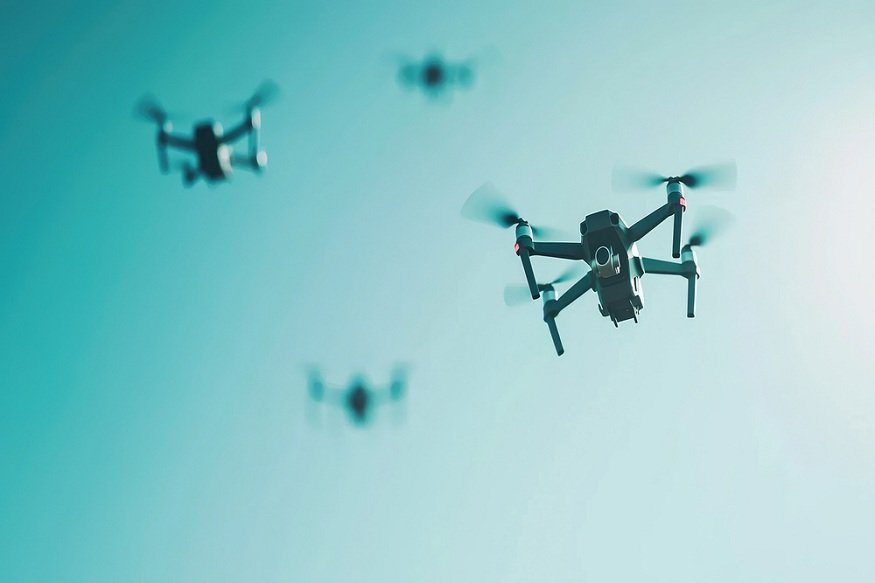
Everyone gives the same advice on how to keep a drone flying longer. Bigger battery. Sounds right on the surface. More juice, more air time. But that misses most of the story. A larger battery adds weight. This causes the drone to use more power just to hover. Endurance has way more moving parts than one.
The Battery Trap
Here’s the twist nobody brings up. More battery capacity means more weight. The weight strains the motors. It makes them work harder and draining the battery faster. So you win some flight time on the spec sheet, then quietly give a chunk of it back. Eventually the math flips on you. Keep piling on cells and the drone gets so heavy it can barely haul itself off the ground. The battery counts for a lot. Treating it as the whole answer, though? That’s the trap.
Read More: How to Get a Free Zone License in Dubai: A Complete Guide
Weight Is the Real Enemy
Every gram costs you. A heavier frame, heavier motors, heavier whatever, it all means more power spent wrestling gravity. Shave the weight and the aircraft suddenly works less to pull off the same job. Which is why sharp drone builders fuss over materials so much. Composites like carbon fiber let them build frames that stay strong while dropping serious weight. A lighter airframe stretches the battery you’ve already got.
Propellers Do More Than You Think
Most people see propellers as plain spinning blades. But a good propeller is a carefully shaped tool. Furthermore, its design has a huge say in how efficiently a drone flies. The right shape bites more air with less effort, saving power on every turn. That’s where quality UAV propellers (aerodinecomposites.com/custom-uav-drone-propellers) earn their keep, and Aerodine Composites builds them with real precision. Working with advanced composites and years of hands on manufacturing, they turn out propellers that run light, hold up strong, and get shaped to pull more range from every charge.
Motors and Efficiency
Propellers never fly solo. They team up with motors, and how well the two match makes a big difference. A motor spinning the wrong prop dumps energy out as heat instead of turning it into lift. Power gone, just like that. Pair them right, and the drone runs smoother and lasts longer. Efficiency isn’t one magic component. It’s a whole crew of parts working together, each one carrying its share. Get everything in sync and endurance climbs.
Flying Smart
The way a drone gets flown changes endurance too. Mashing the throttle, cranking hard turns, parking in a hover, all of it eats extra power. Smooth and steady flying sips energy instead of chugging it. Weather muscles in as well. Wind forces a drone to fight for its spot, and cold knocks battery performance down fast. A well built, lightweight aircraft rides out rough conditions better, so it burns less energy just staying level. Small stuff, big payoff.
Read More: How Software Defined Branch Transforms Distributed Enterprise Networking
It All Adds Up
Endurance is a team sport. The battery matters. So does the frame, the propellers, the motors, and how the thing gets flown. Fix one piece and you gain a little. Fix all of them and the wins pile up. That’s the reason the top long-range drones don’t simply carry huge batteries. They’re lightweight, cleverly designed, and each part works efficiently. The battery grabs the credit. The real work is spread across the whole aircraft.
Conclusion
A larger battery is the simple solution. However, it’s just part of the bigger picture. You achieve true endurance by cutting weight, sharpening propellers, matching motors, and flying gently. Build the whole aircraft smart and it stays up longer on less. Range isn’t about more power. It’s about wasting less of it.